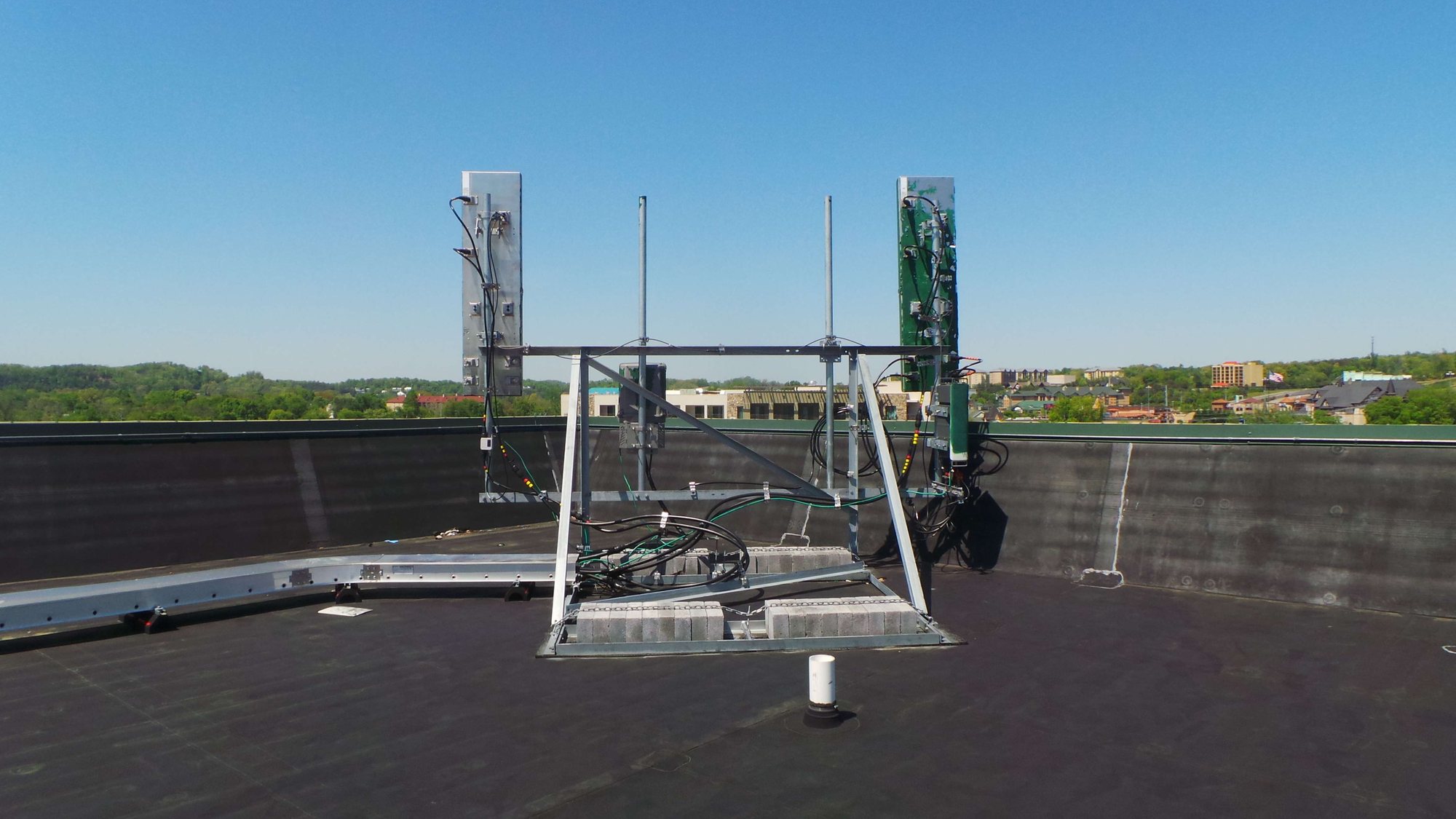
Trial work: Across three visits, we tested the rooftop antenna pair at 6 feet, 3 feet, and the original layout. I documented the RRU32 port plan, pre/post checks, sweep and PIM records, and final validation after the original configuration was restored.
3 visitsThree trial visits over two weeks
6 ft → 3 ftTwo test spacings before returning to the original layout
24/24 PASSFinal-configuration PIM reports across LTE 700 and AWS
48 tracesFinal DTF and return-loss sweep files across 24 feeder paths
Three documented rooftop configurations
- April 17: 6-foot spacing. We tested the antenna pair at 6 feet apart. RRU32 ports A and B were assigned to the left antenna, with C and D on the right. I documented the LTE and AWS sweep, PIM, and pre/post results.
- April 24: 3-foot spacing. We changed the pair from 6 feet to 3 feet apart. Rain prevented new sweep and PIM runs, so the same lines stayed in place. I documented the pre/post checks; the site update records no alarms.
- May 1: original layout restored. We returned the antennas to the original layout. I documented new LTE 700 and AWS sweep, PIM, and pre/post results, with no alarms recorded.
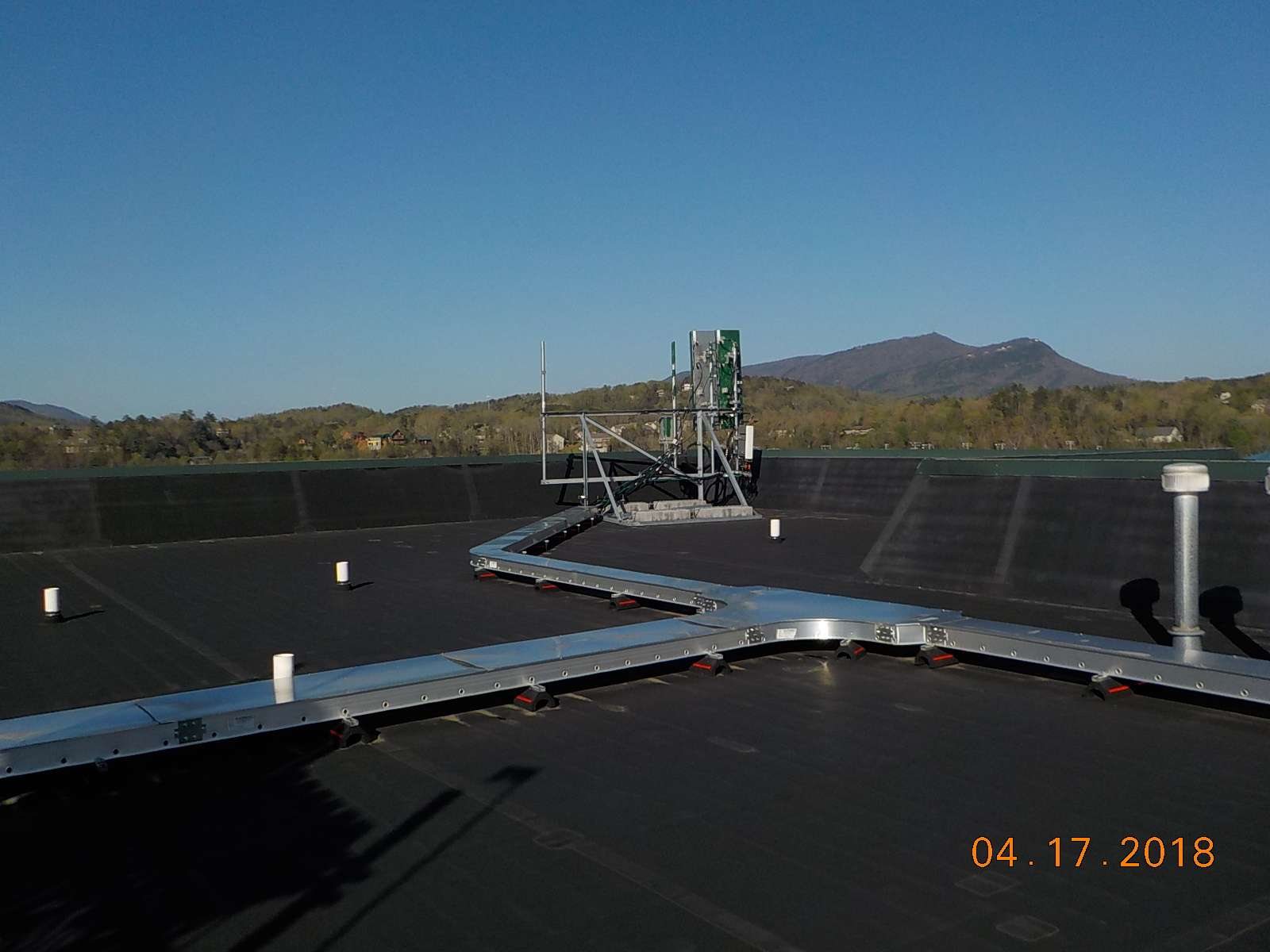
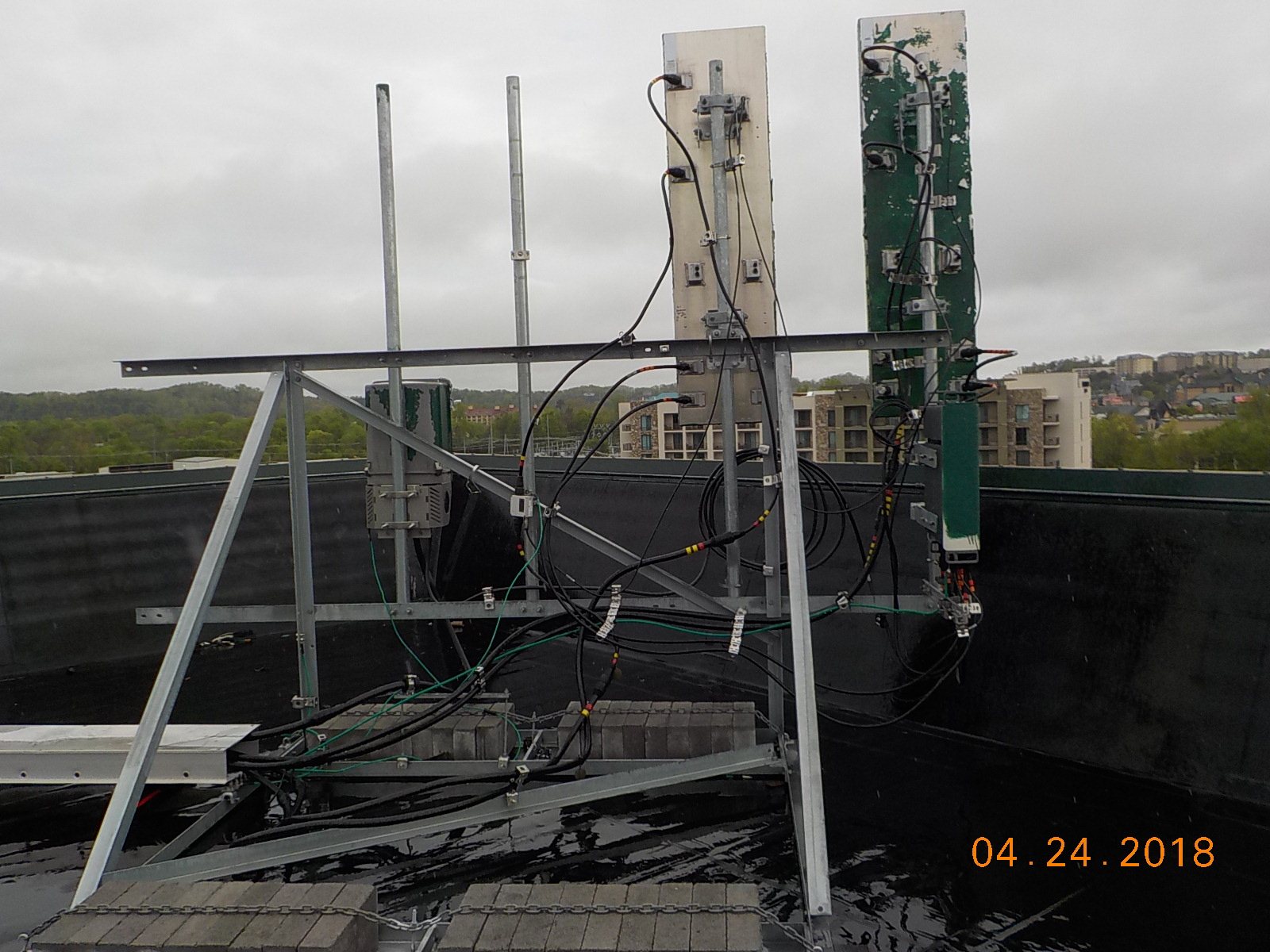
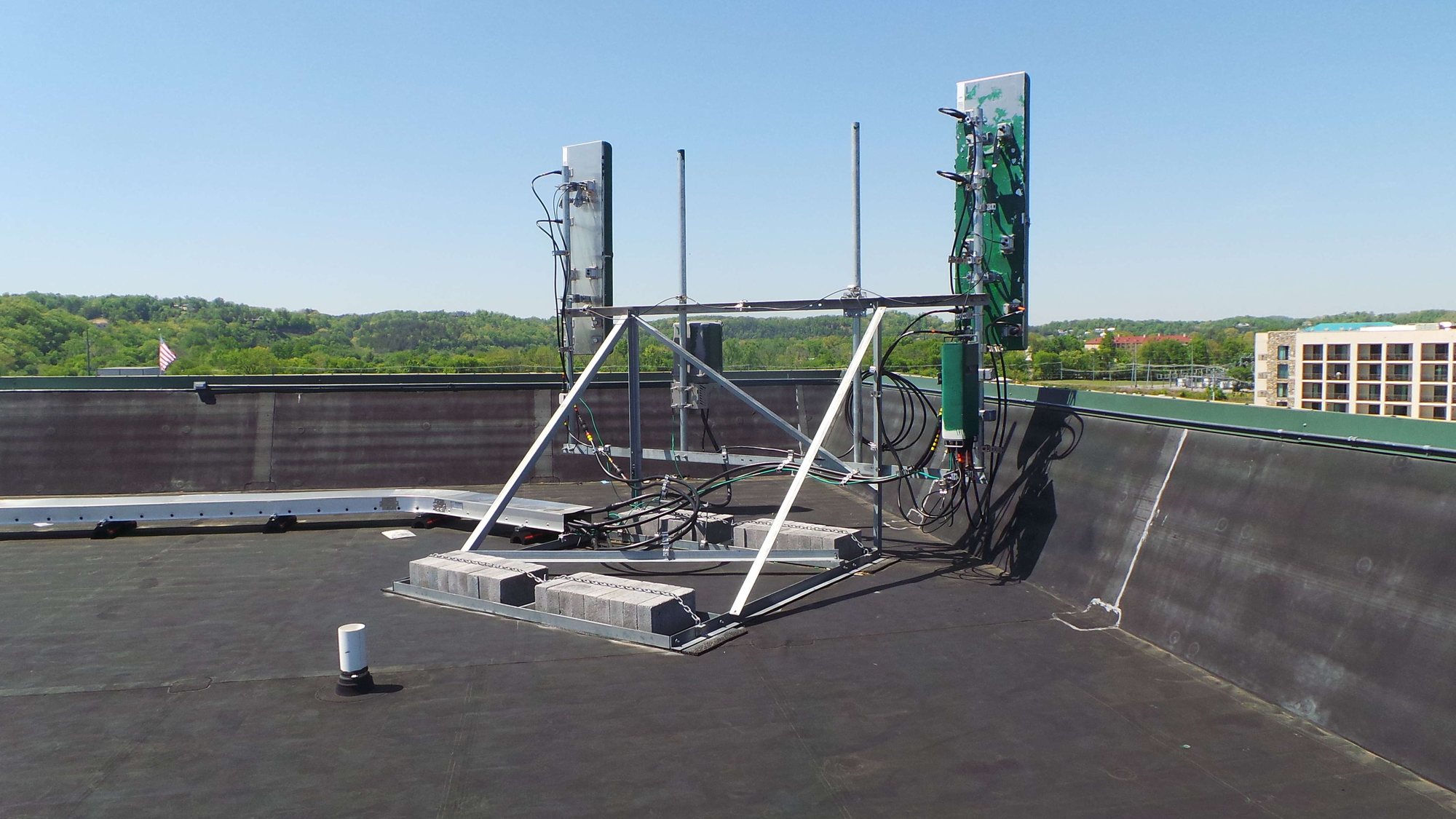
RF evidence across the trial
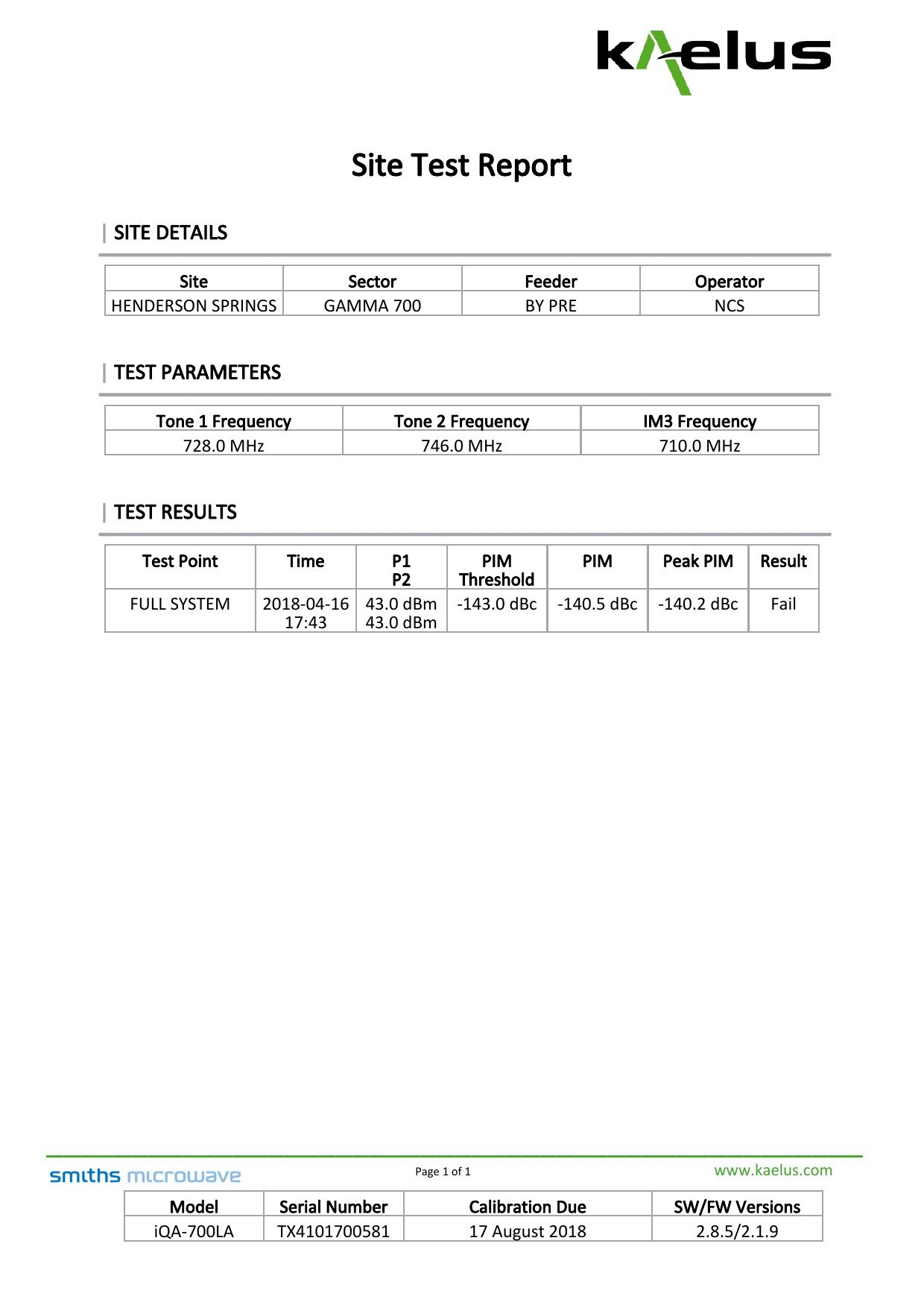
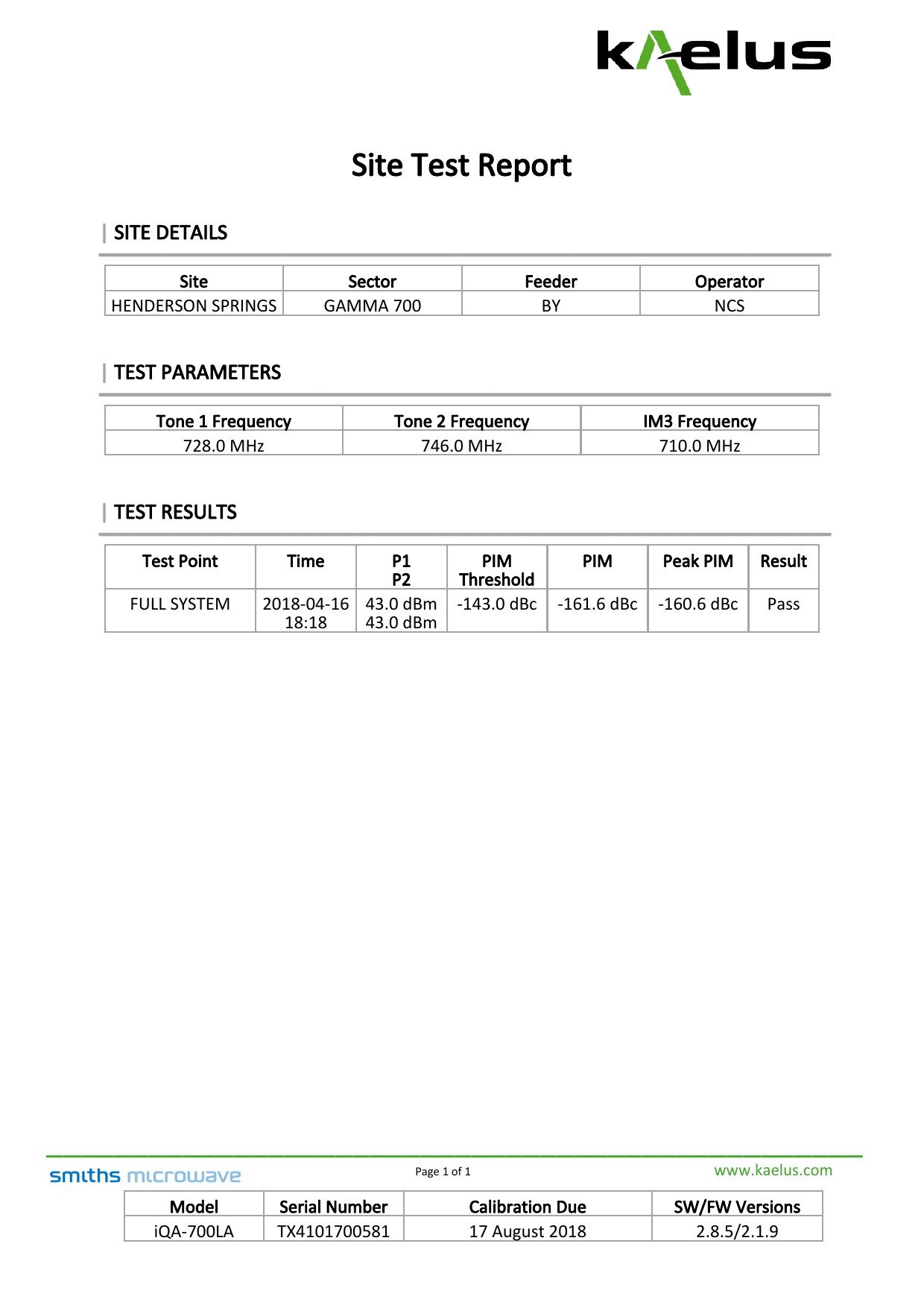
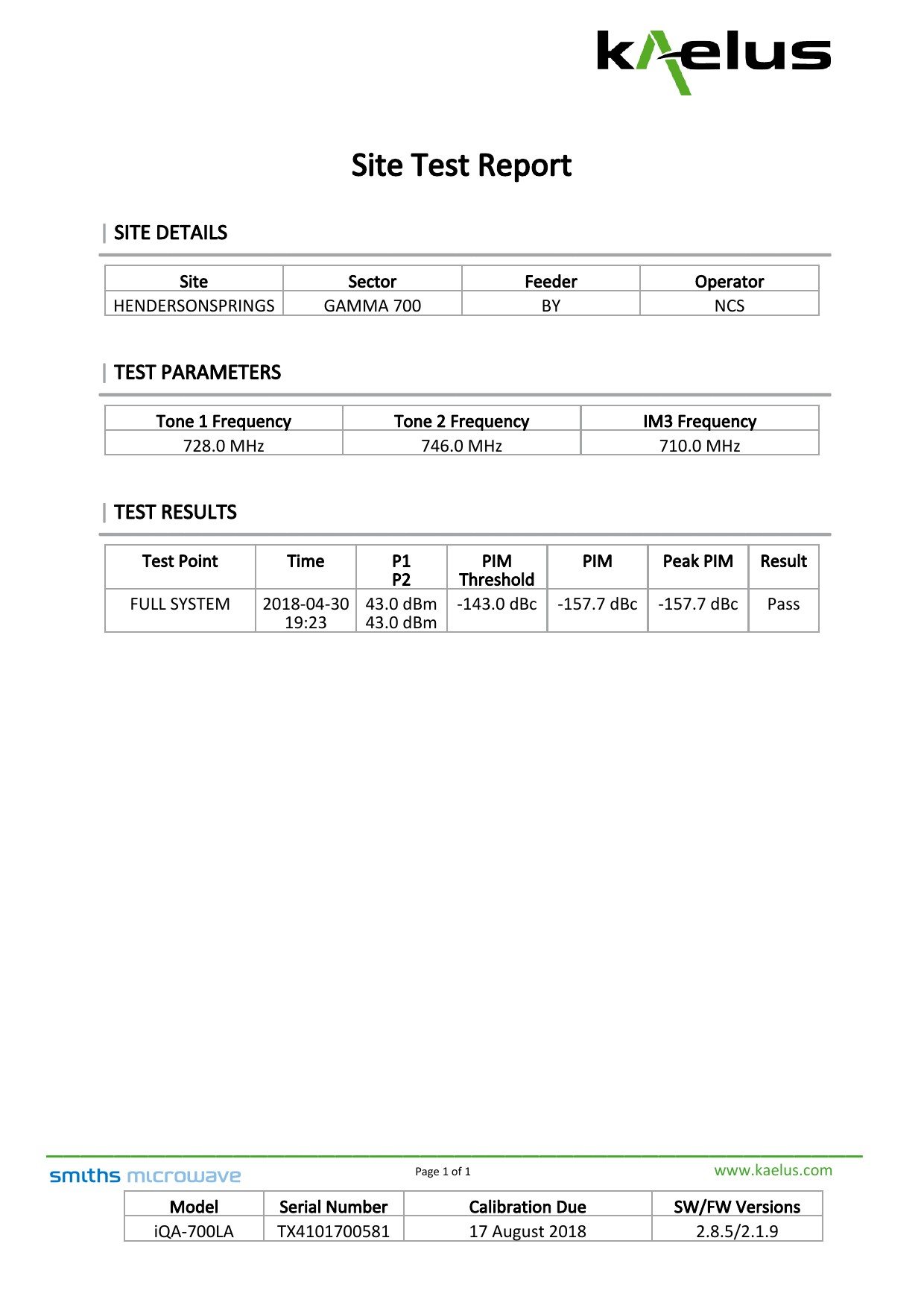
The project files include 60 Kaelus PIM reports. Two initial 700 MHz checks failed the -143.0 dBc threshold, and both same-day retests passed. After the antennas were returned to the original layout, all 24 PIM reports passed. The final files also include 48 raw sweeps—distance-to-fault and return-loss traces for 24 LTE 700 and AWS feeder paths.
Representative Gamma 700 BY PIM sequence · threshold -143.0 dBc
| Checkpoint | PIM | Peak PIM | Result |
|---|---|---|---|
| Initial pre-check · April 16 | -140.5 dBc | -140.2 dBc | FAIL |
| Same-day retest · April 16 | -161.6 dBc | -160.6 dBc | PASS |
| Restored-configuration check · April 30 | -157.7 dBc | -157.7 dBc | PASS |
Physical configuration and documentation
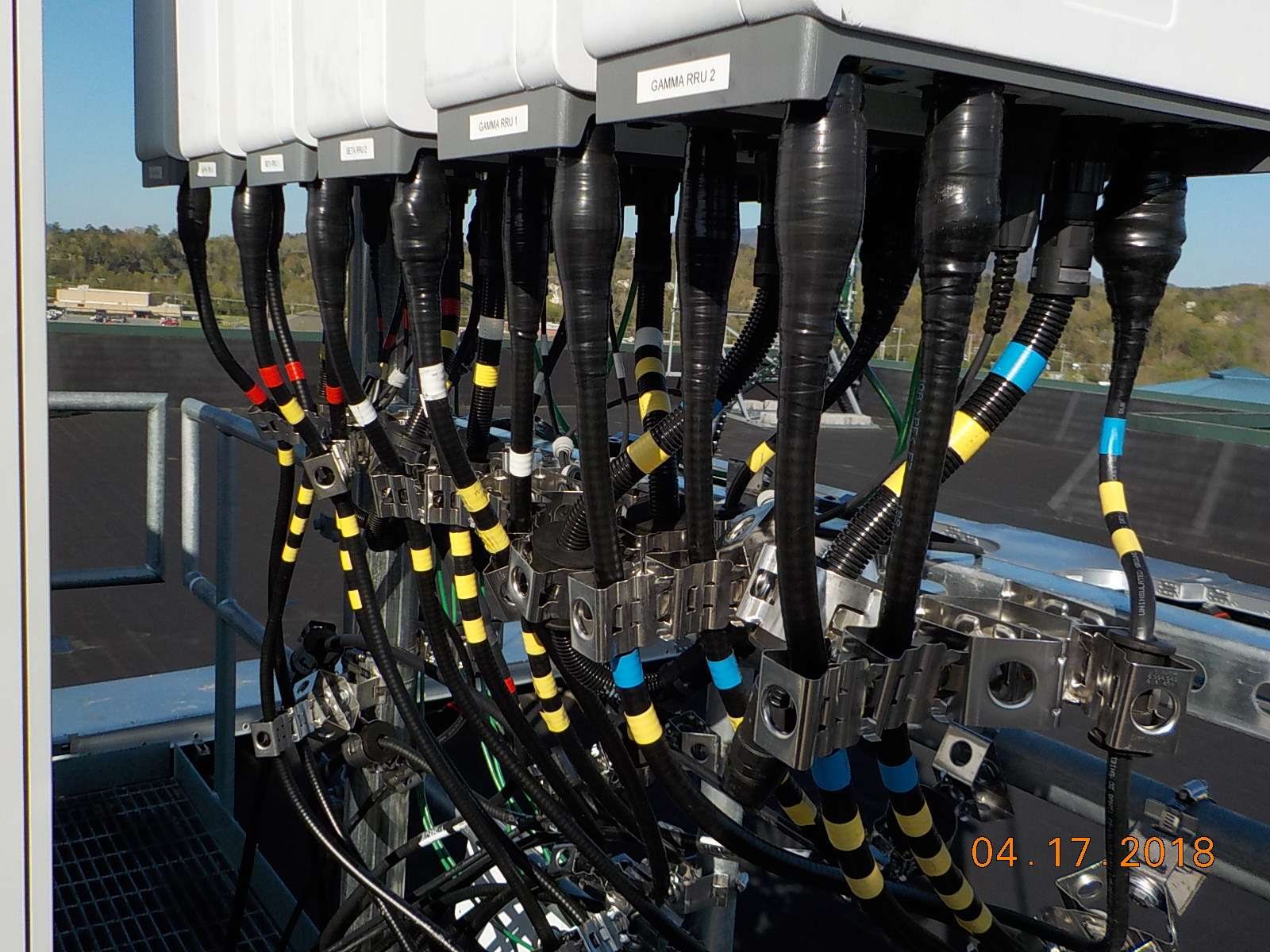
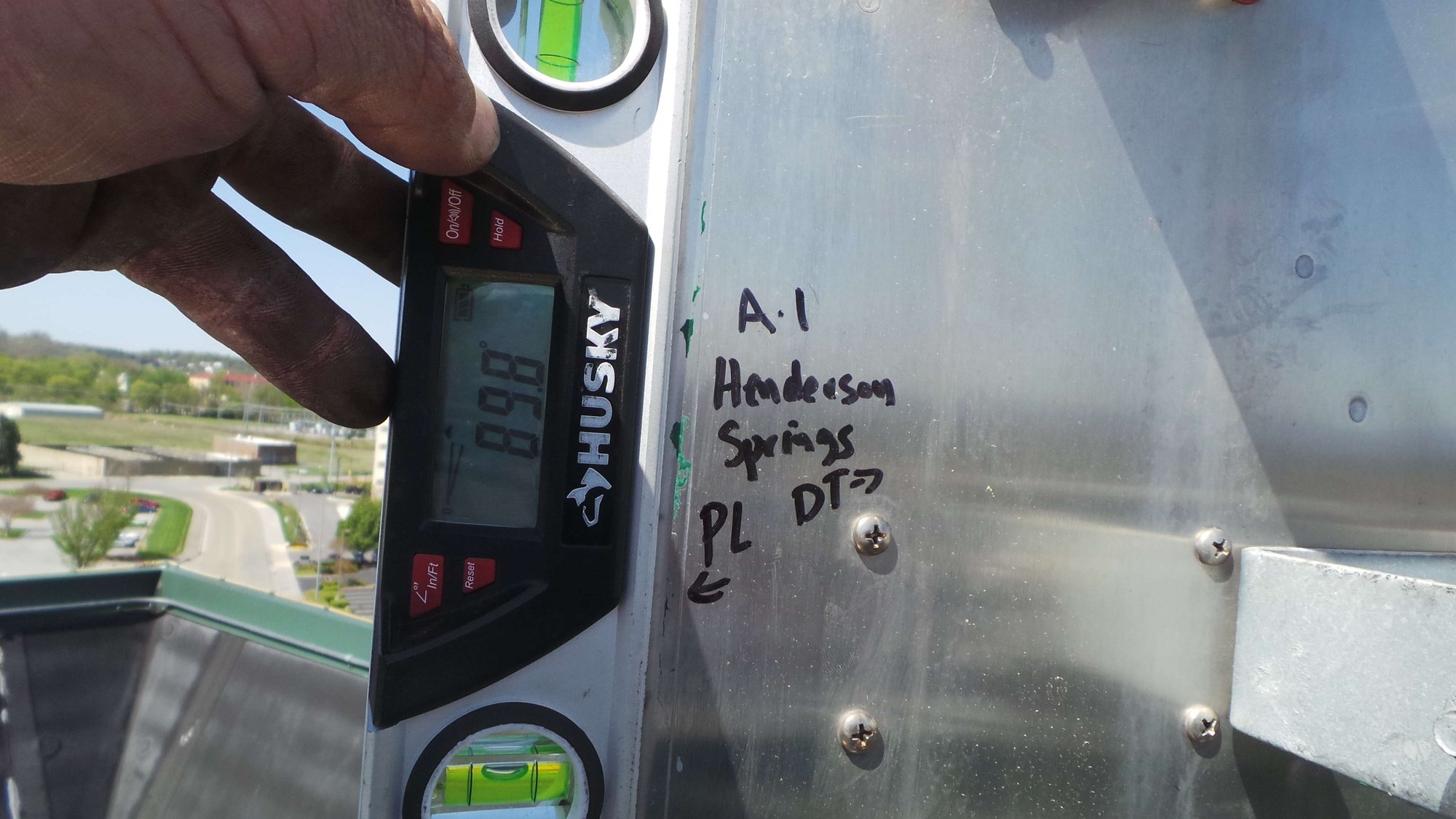
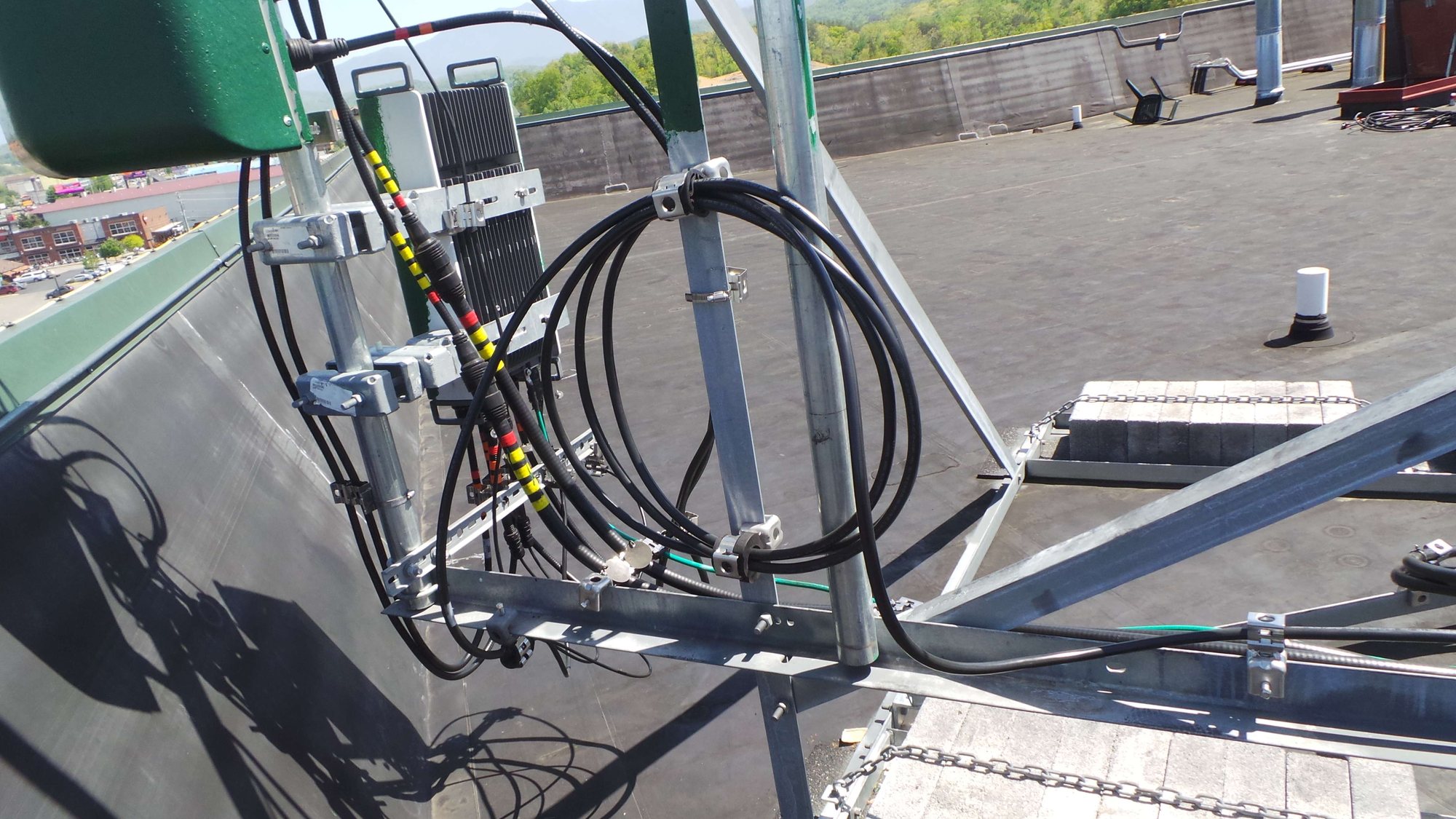
The photos show the labels, color-coded jumpers, connector paths, and mechanical readings used to keep each setup consistent. They also confirm how the antennas and cabling were returned to the original layout.
What the records show: The records document all three configurations, the testing completed, and the return to the original layout. They do not say which spacing worked best, so I am not claiming that result.