Professional field project • July 24-25, 2018

Hampton Park External RF Interference Diagnosis

I first corrected the local alarm, crossed-line, and loose-jumper problems. The remaining PIM readings kept changing across sectors and technologies, so I ran a controlled Gamma 850 antenna-orientation check. The readings changed when the antenna was tilted, pointing to external interference rather than a fixed antenna or feeder fault.

Local faults corrected; remaining interference needed further investigation
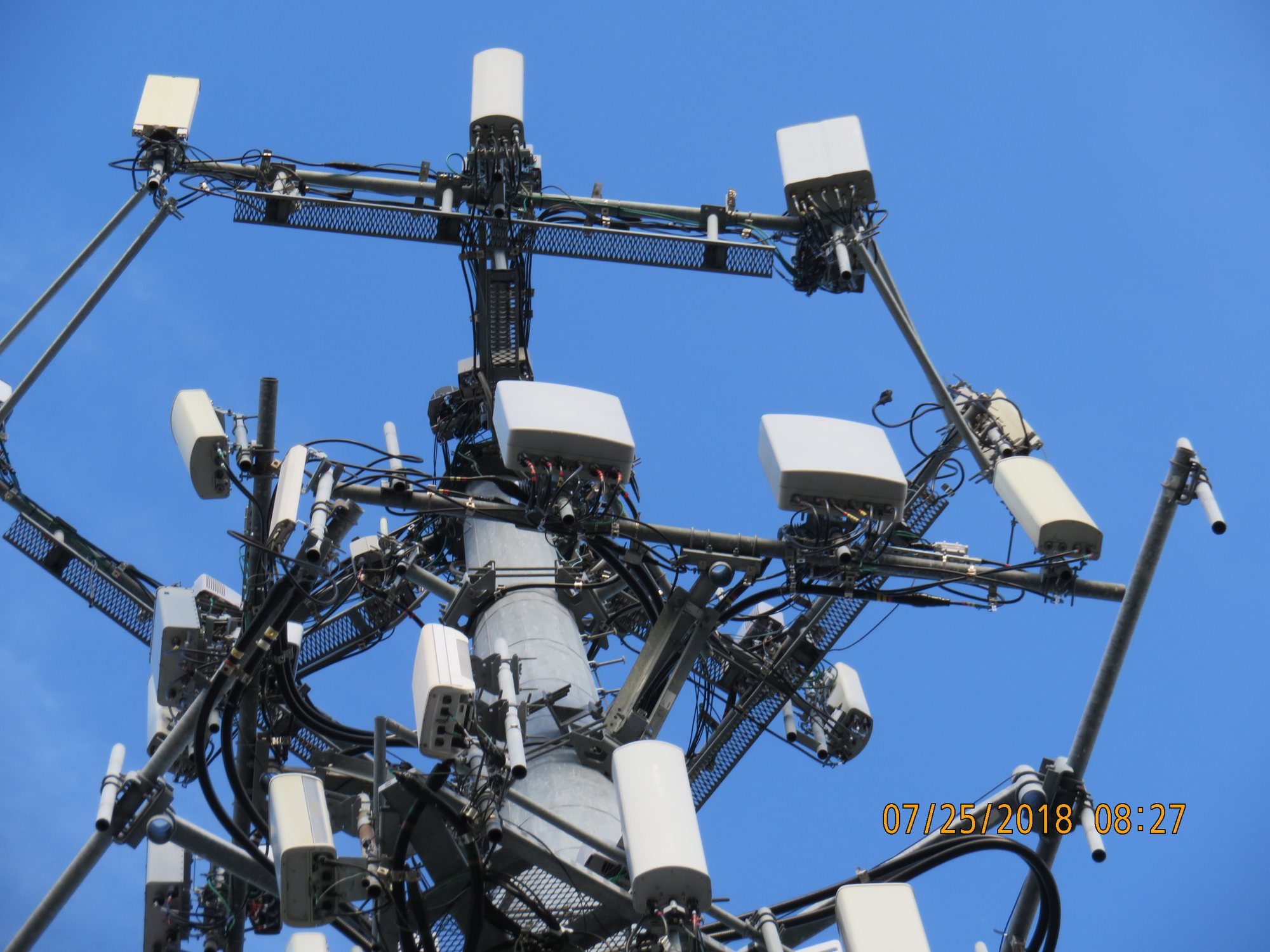
Hampton Park tower sectors investigated during the external interference diagnosis
Hampton Park tower sectors during the second troubleshooting visit, before the controlled Gamma 850 orientation check.
My role: I worked as the ground technician on both visits. I traced and corrected the ground-side RF paths, reviewed the VSWR and PIM readings, fixed the loose Beta PCS radio jumper, and had the tower crew tilt the Gamma antenna for a controlled comparison. I documented the before/after readings and recommended escalation to the carrier’s performance team. The tower crew handled the climb and antenna movement.
2 visitsLocal corrections and interference testing over two days
3 local issuesAlarm clip, crossed paths, and loose radio jumper corrected
5-6 dBChange in Gamma 850 branch 3 and 4 readings during the orientation check
≈15 minDocumented window between the compared readings

Clear the local faults first

On July 24, I cleared an AWS Raycap alarm caused by an incorrectly bent top-Raycap clip. I used VSWR checks and controlled disconnections at the bottom hardlines to trace the 700/850 paths. This found crossed Alpha 700/850 secondary lines and crossed Gamma 700 secondary lines at the triplexers. I corrected those paths before evaluating the remaining interference.
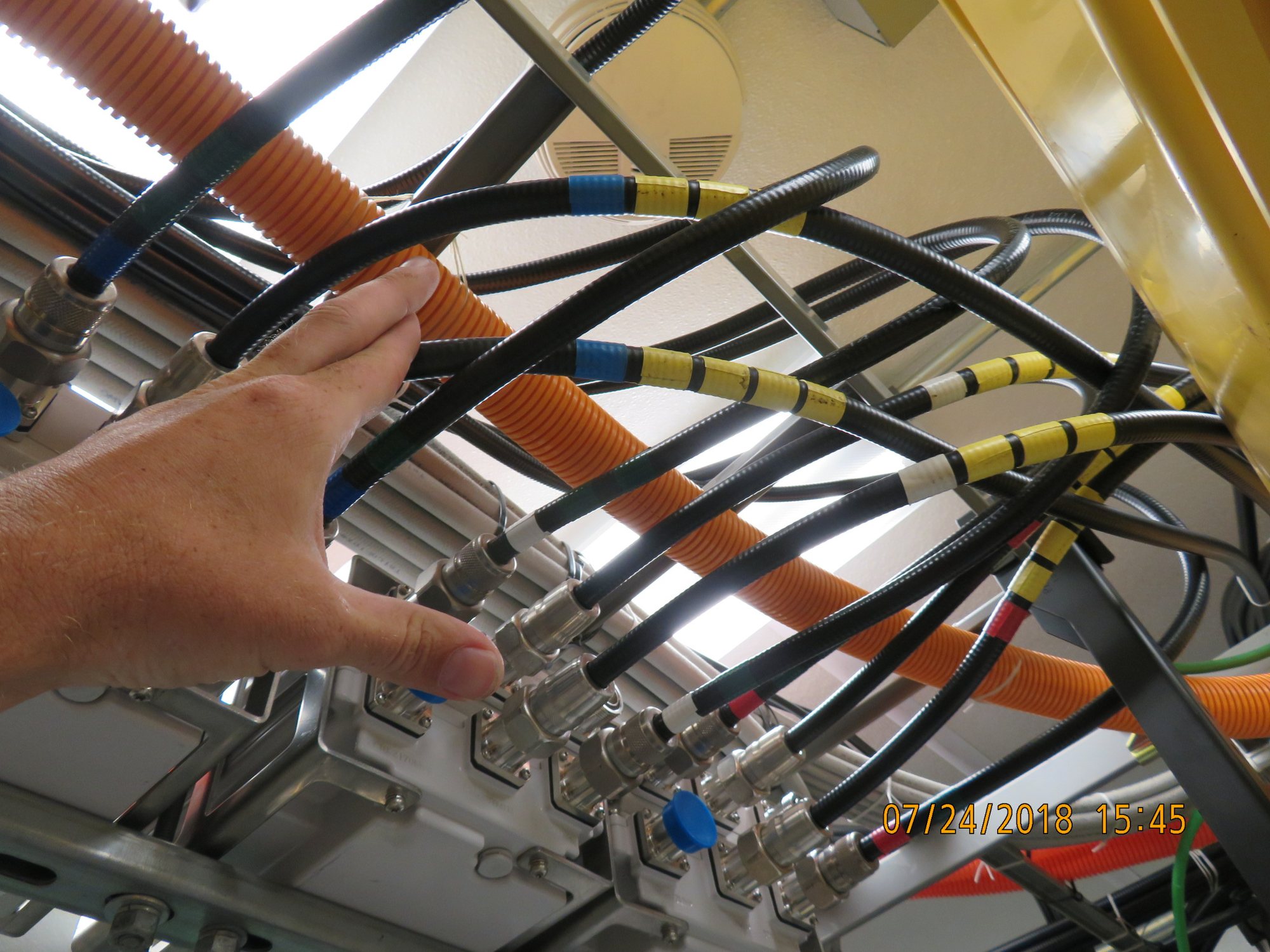
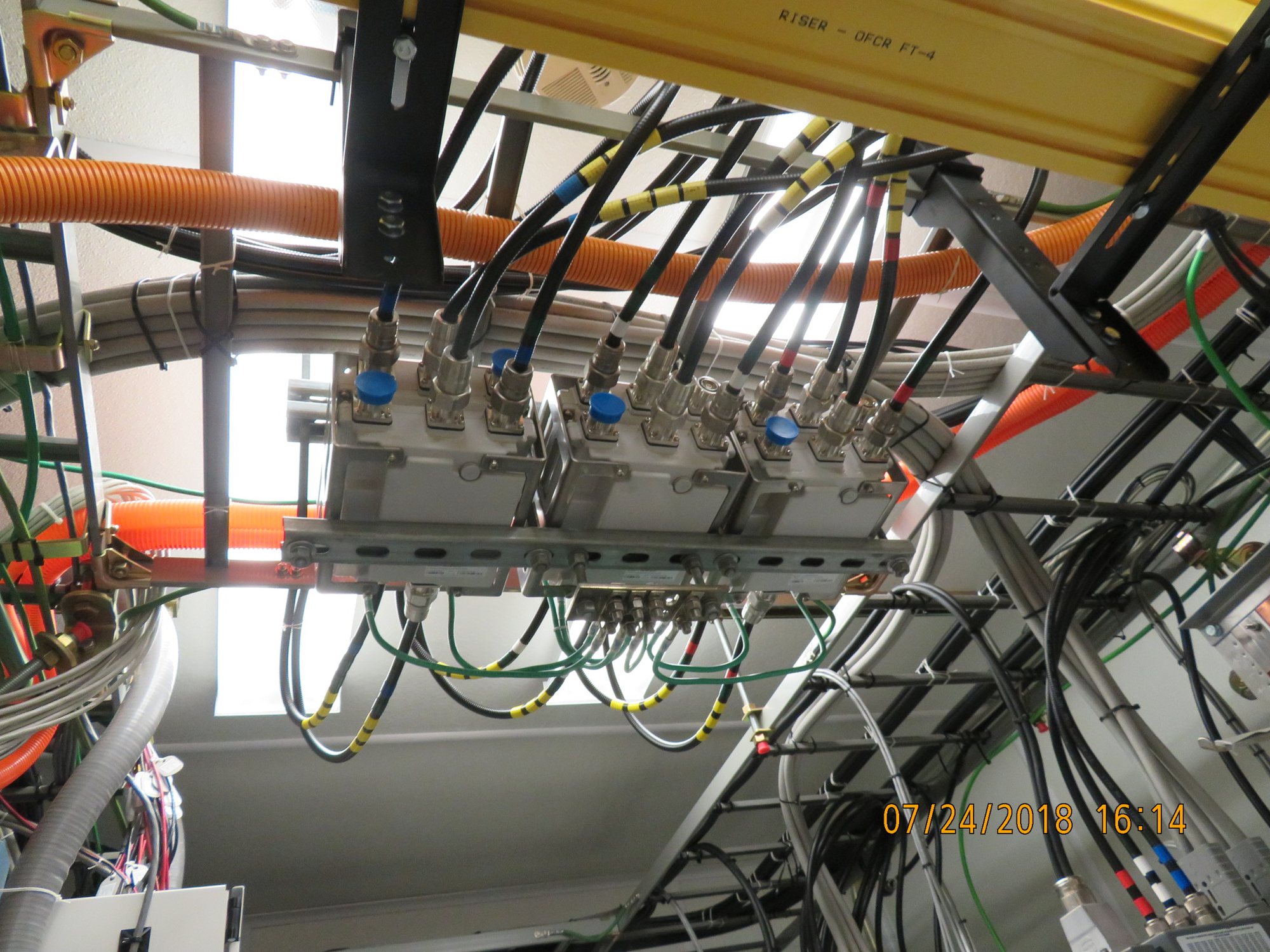
Jerry checking color-coded Hampton Park RF jumper paths at the triplexer bank
Color-coded jumper paths checked at the triplexer bank while tracing the crossed secondary lines.
Hampton Park triplexer bank and connected RF paths after routing checks
The triplexer bank and connected paths documented after the routing checks.

Use an orientation check to isolate the remaining problem

  1. Track how the readings changed. The July 24 update records PIM that shifted during the day across sectors and technologies, with Gamma 850 secondary producing the worst readings. That variability did not behave like one fixed failed component.
  2. Fix the remaining local jumper problem. On July 25, I corrected Beta PCS branch 2 PIM by securing a loose jumper at the radio.
  3. Change only the antenna orientation. I had the tower crew tilt the Gamma G1 850 antenna upward while I compared the four branch readings from the ground.
  4. Compare the same branches right away. Gamma 850 branch 3 changed from a recorded -109 to -114 and branch 4 from -109 to -115 in the documented comparison—5 and 6 dB more negative within roughly 15 minutes.
  5. Recommend performance-team follow-up. Because the symptom changed with orientation and time, I recommended that the carrier's performance team locate the external emitter rather than replacing another antenna or feeder component.
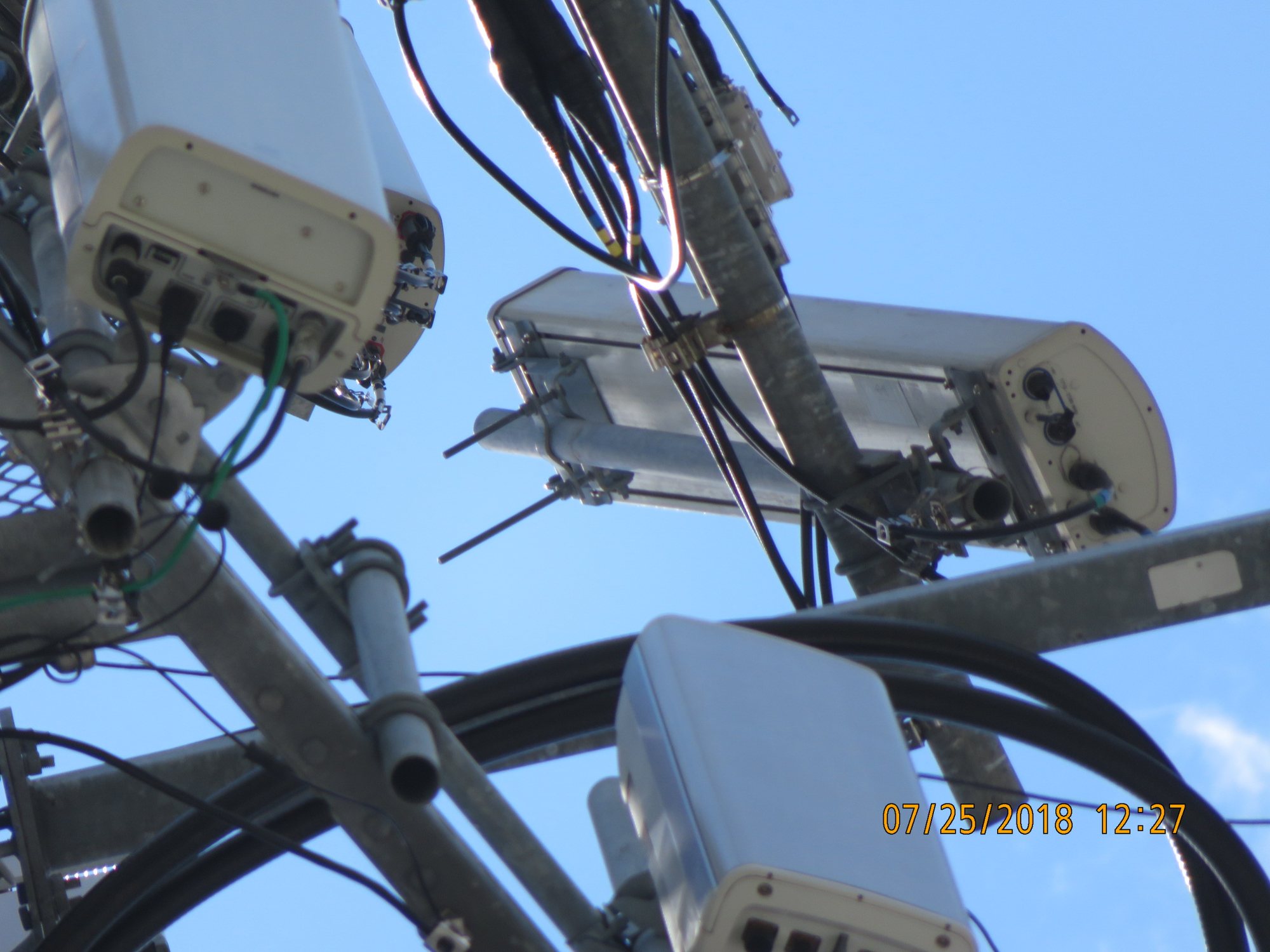
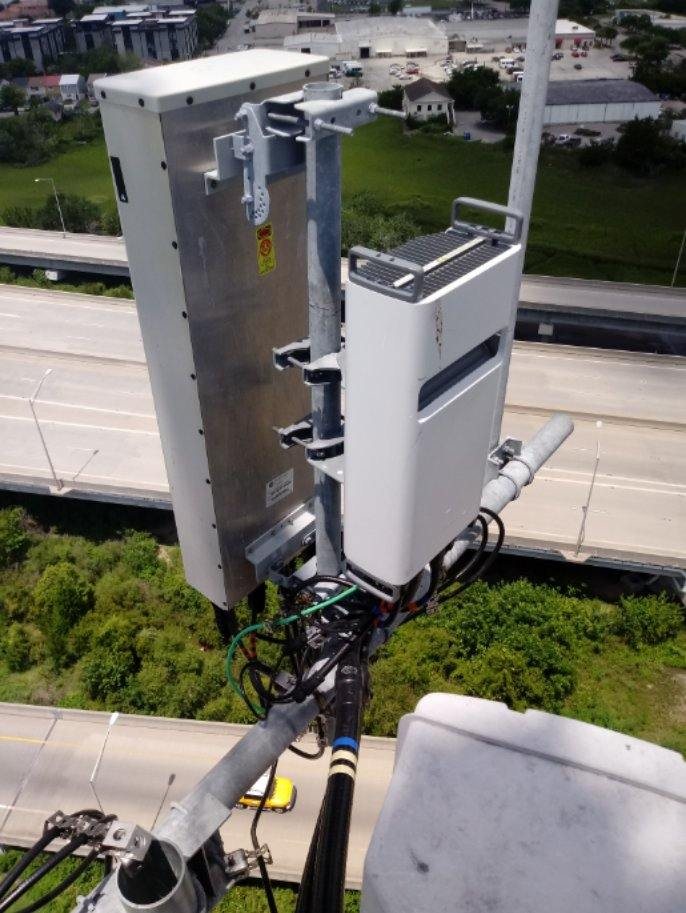
Hampton Park Gamma G1 antenna tilted upward for the controlled RF comparison
The Gamma G1 antenna temporarily tilted upward for the controlled comparison.
Hampton Park antenna and radio group photographed from the tower
Tower-side antenna and radio group documented during the July 25 work.

The branch comparison

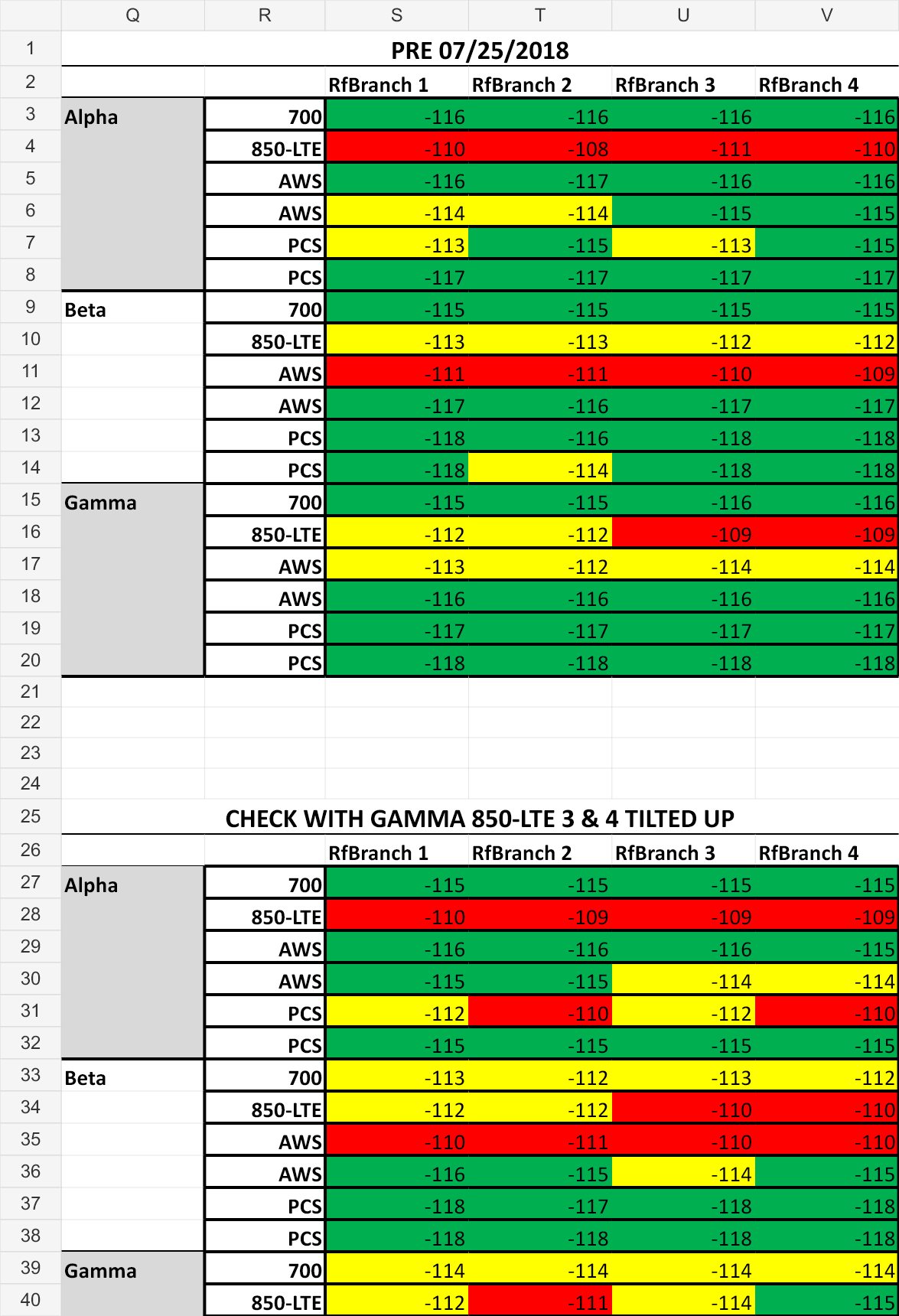
The worksheet below comes directly from my July 25 PIM comparison. It shows the full Alpha, Beta, and Gamma results, including the targeted change on Gamma 850 branches 3 and 4.

Gamma 850-LTE orientation comparison · recorded PIM readings
ConditionBranch 1Branch 2Branch 3Branch 4
Pre · July 25-112-112-109-109
G1 antenna tilted up-112-111-114-115
Change0 dB1 dB5 dB6 dB
Hampton Park worksheet comparing pre-check PIM readings with Gamma 850 branches 3 and 4 tilted upward
Original comparison worksheet: Gamma 850 branches 3 and 4 changed from -109 to -114 and -115 after the antenna was tilted upward.

What the test showed—and what it did not

The reading change pointed to external interference, but it did not identify the source. The site update mentions the elevated roadway in the Gamma direction as one possibility, not a confirmed cause. I documented the surrounding RF environment and recommended that the performance team continue the source-location work.
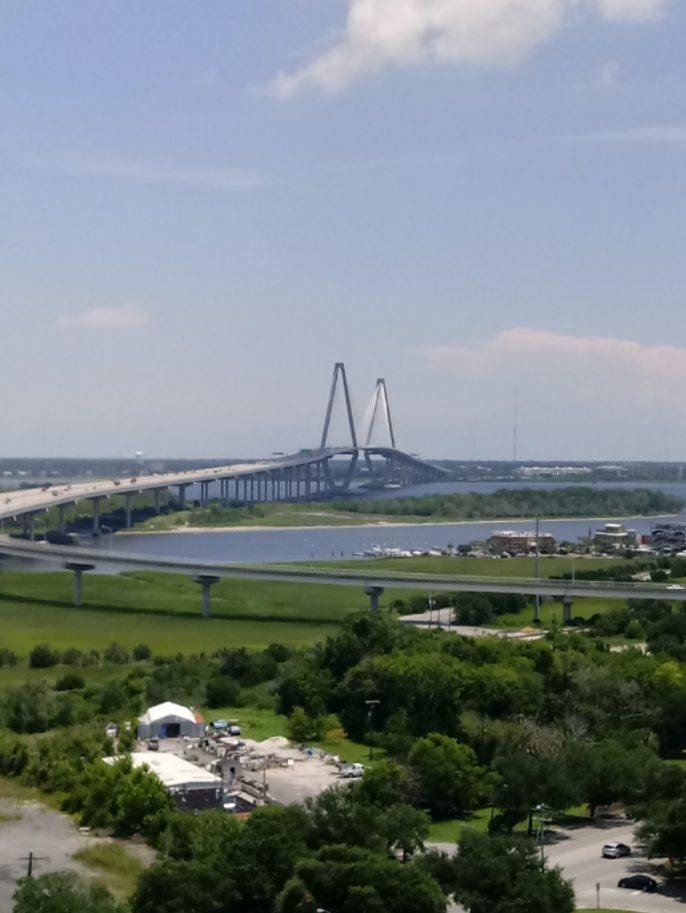
Roadway and bridge in the Hampton Park Gamma sector environment
RF environment in the Gamma sector direction. The specific external source was not located during this ticket.
Remaining work: I corrected the alarm, crossed-line, and loose-jumper issues. The orientation check pointed to external interference, but the source was not found during these visits. I recommended follow-up by the carrier’s performance team.