Professional field project • May 8-10, 2018

Brook Hollow 4xTx Radio Modernization

Over three days, I worked from the ground with the tower climbing crew to modernize Alpha, Beta, and Gamma. The climbers handled the top-side radio changes while I handled the ground-side optics, power, fiber validation, coordination, and RET handoff.

Radio upgrade complete; RET follow-up handed to the cell technician
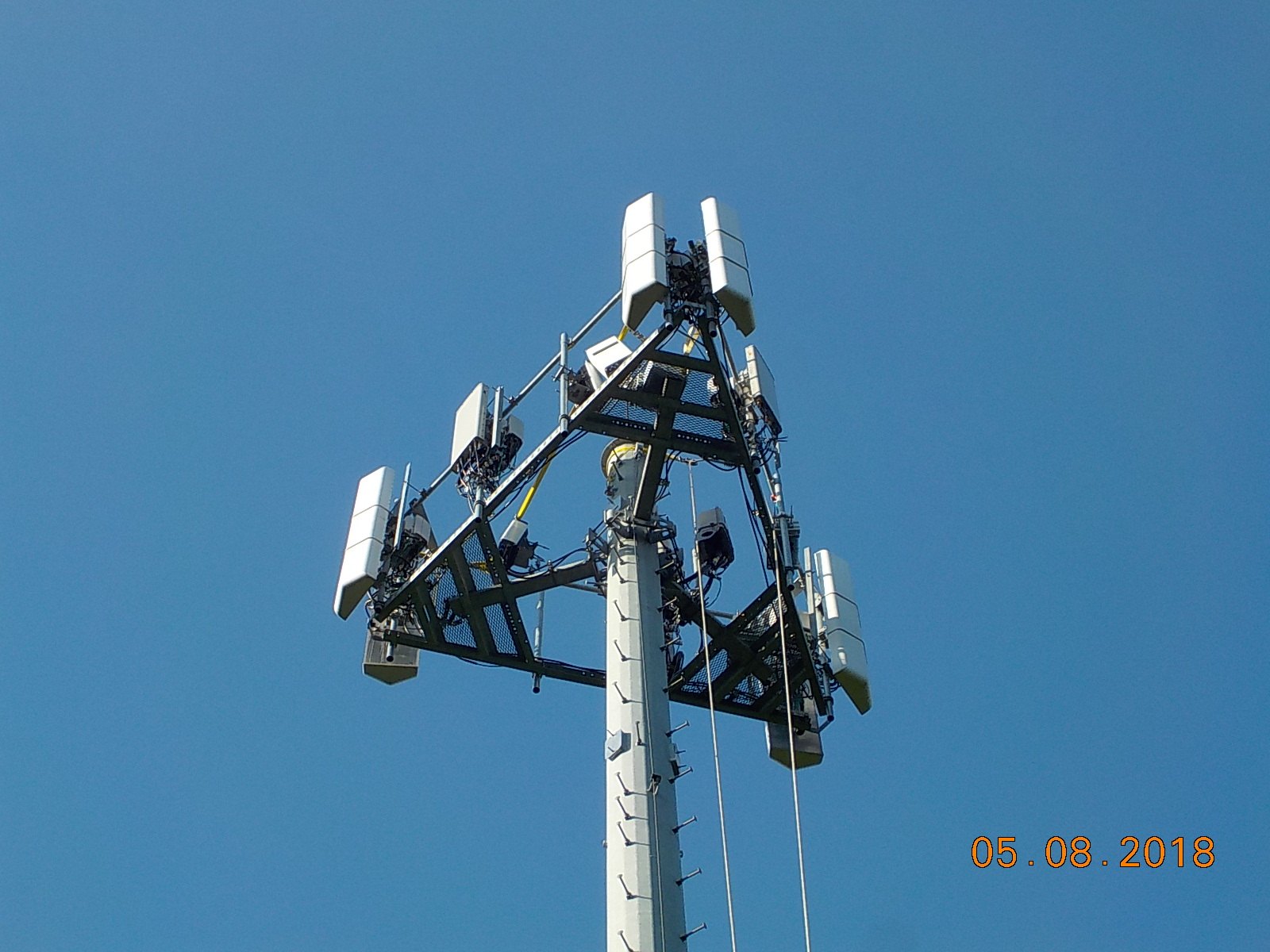
Brook Hollow tower with Alpha, Beta, and Gamma sector equipment
Brook Hollow sector equipment at the start of the three-day 4xTx modernization.
My role: I worked from the ground alongside the tower climbing crew; I did not perform the tower climbs. I staged and labeled the equipment by sector, handled the ground-side radio, power, optics, and fiber work, ran OTDR tests, repaired a commercial-power alarm wire, coordinated the climbers' top-side work, and documented the remaining RET issues for cell-tech follow-up.
3 sectorsAlpha, Beta, and Gamma completed across three consecutive field days
6 radiosLTE RRU12 to 2212 and AWS RRU12 to RRUS32 in every sector
6/6 PASSOTDR paths measured between 0.685 and 0.951 dB link loss
2.5G → 10GSector optics upgraded at the XMU during modernization

Preparing the equipment for cutover

On May 8, I worked with the climbing crew to prepare the site and stage the 2212 and RRUS32 radios. I organized the jumpers, hybrid paths, optics, and sector assignments by color before the cutover work began. I also found that we needed nine TPA 30A glass fuses before the remaining power changes could be completed.
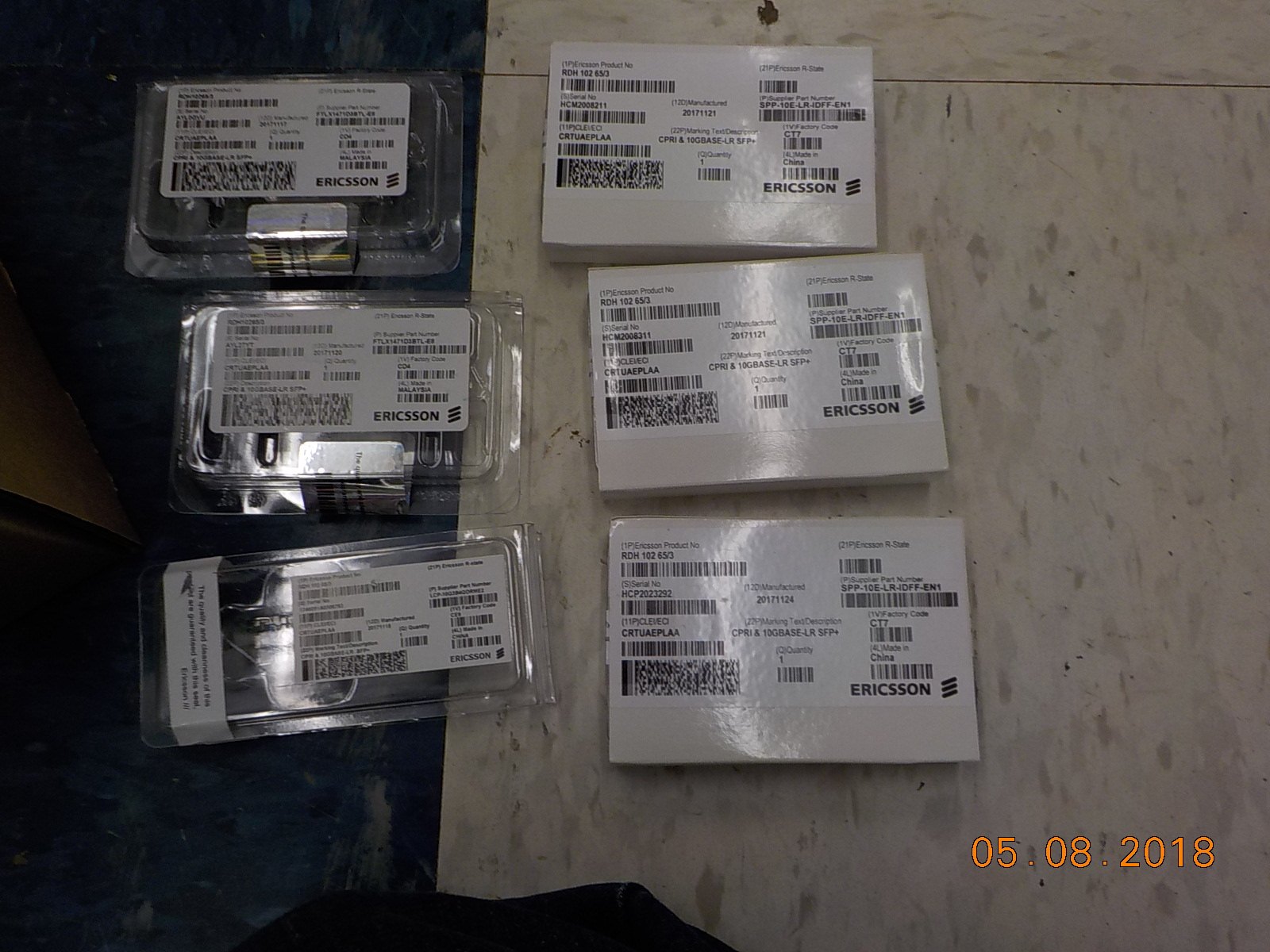
Six Ericsson 10-gigabit optical modules staged for Brook Hollow
Six optical modules staged for the LTE and AWS transport upgrades across three sectors.
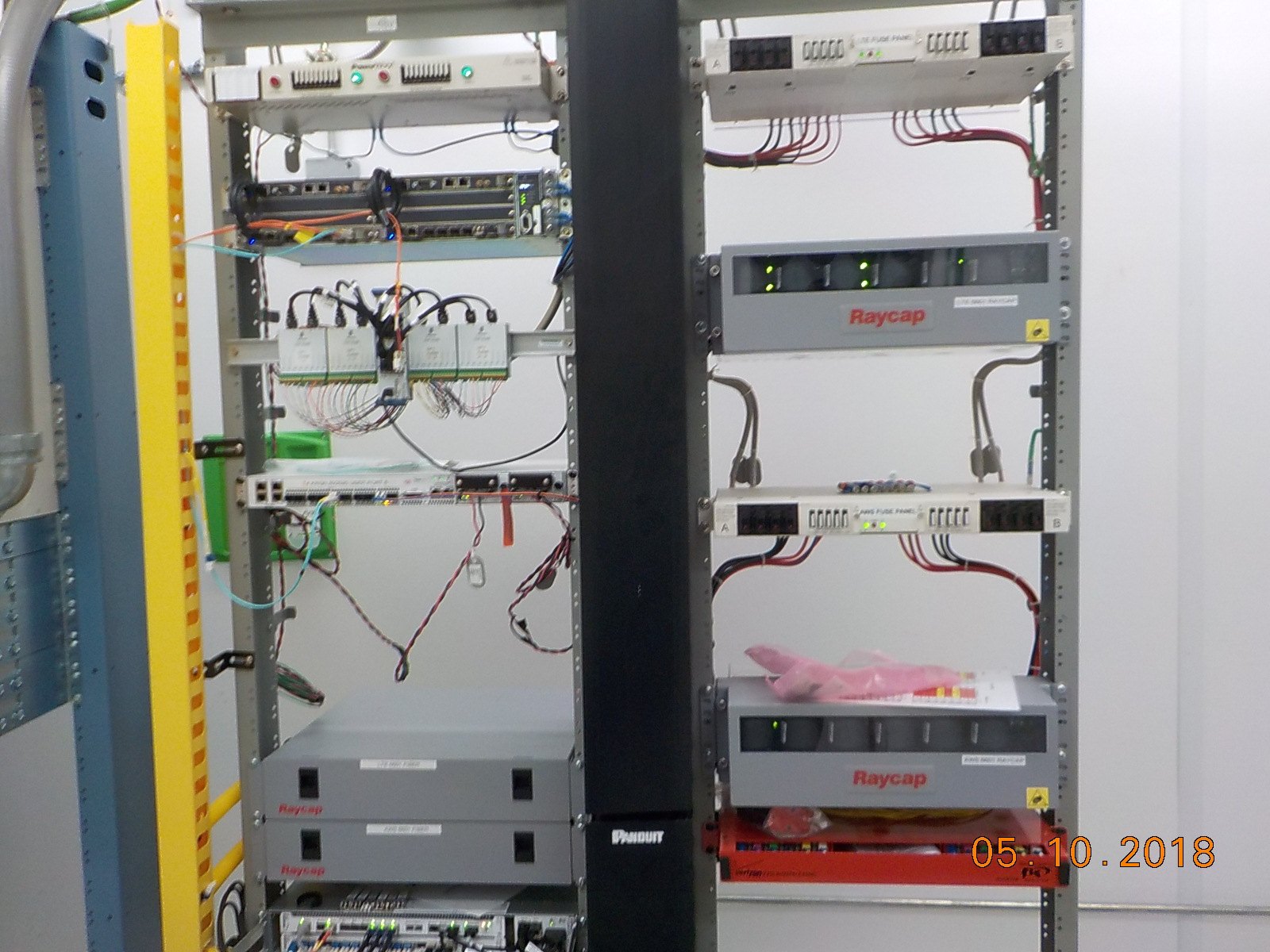
Open Brook Hollow equipment cabinet during ground-side upgrade work
Ground cabinet during the radio, optics, fuse, and fiber changes.

The same upgrade across all three sectors

The climbing crew handled the top-side radio and jumper work while I handled the ground-side changes and coordinated each sector. We completed Alpha first on May 9, followed by Beta and Gamma on May 10. In every sector, the LTE RRU12 was replaced with an Ericsson 2212, the AWS RRU12 was replaced with an RRUS32, the LTE raycap was powered for the secondary 2212, the XMU optics moved from 2.5-gigabit to 10-gigabit, and the LTE and AWS fuses moved from 20A to 30A.

During Alpha work, I also traced an existing commercial-power failure alarm to a broken wire at punch-down block 2 and corrected the alarm path.
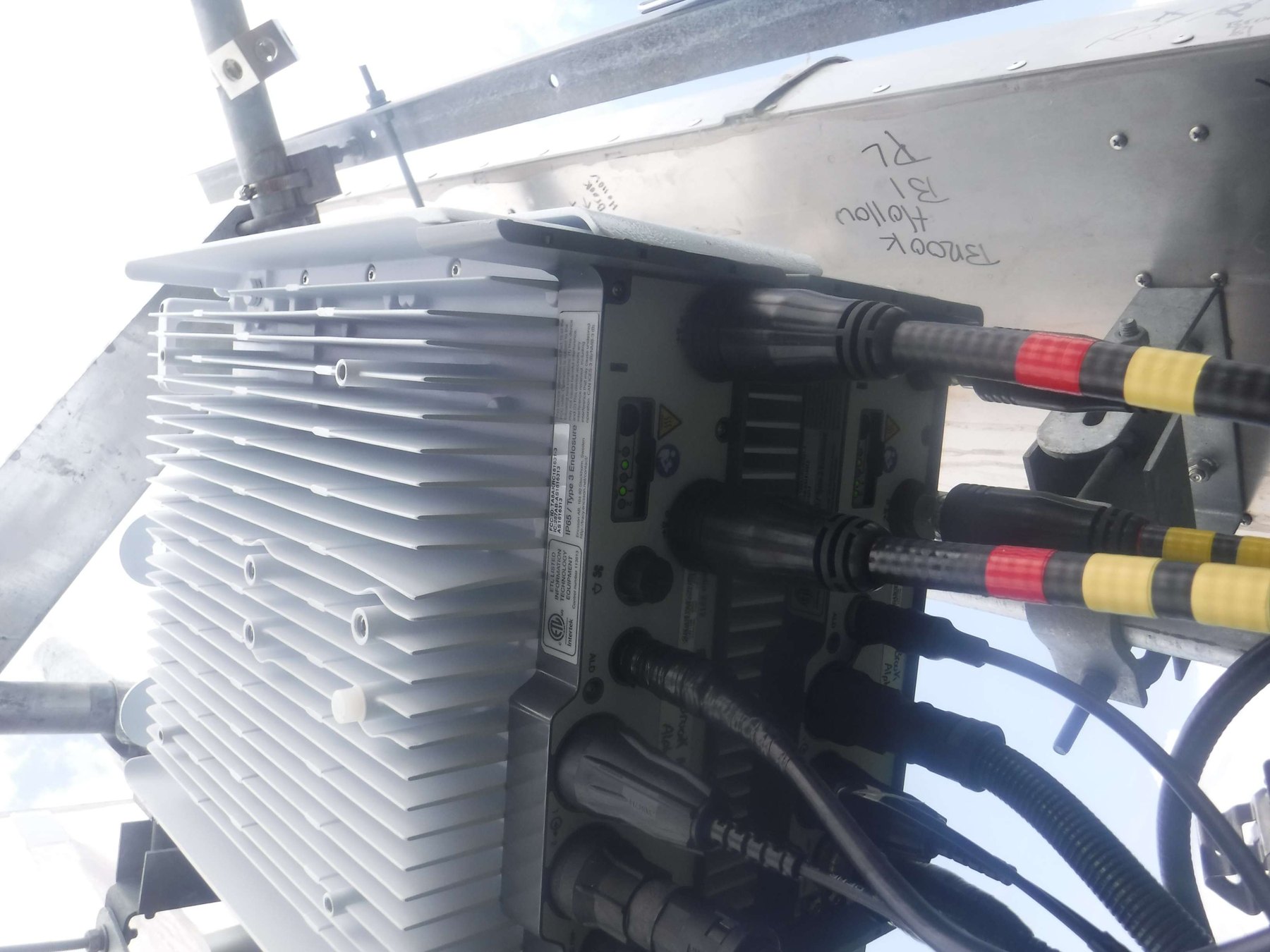
Ericsson RRUS32 connected at the Brook Hollow tower top
Tower-crew photo of the top-side RRUS32 installation with jumpers connected and dressed.
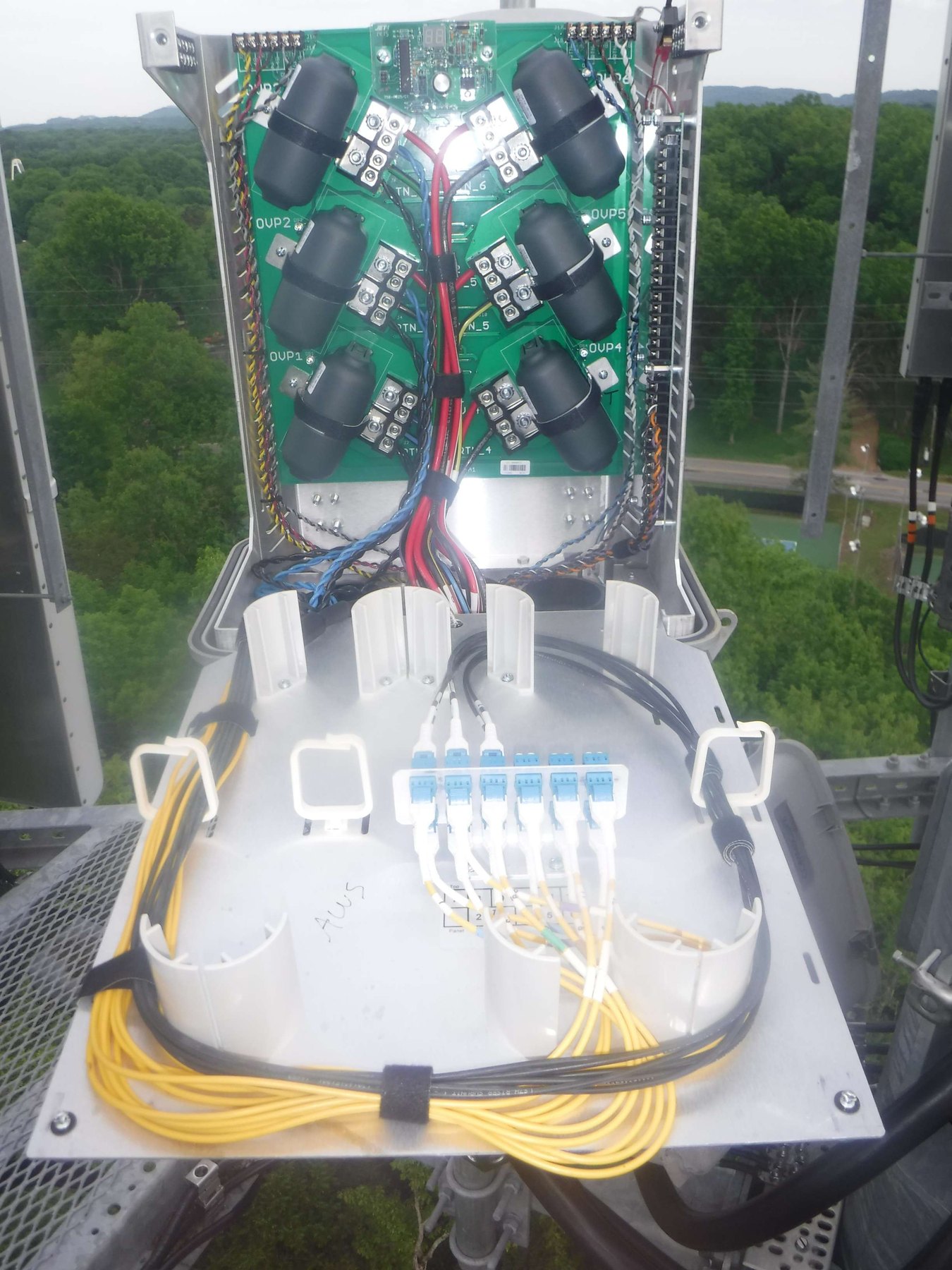
Brook Hollow top-side fiber and raycap connections
Tower-crew photo of the top-side fiber and power connections for the upgraded radio paths.
Completed Brook Hollow sector with upgraded radios and antennas
Tower-crew view of one completed sector, showing the installed radio and antenna arrangement.

Six fiber paths, six passing OTDR results

The six color-coded fiber paths all returned passing OTDR reports. Link loss stayed within a narrow 0.685-0.951 dB range over approximately 496-503 feet.

Brook Hollow OTDR validation
PathLink lossFiber endResult
BO0.951 dB503.03 ftPASS
BY0.785 dB501.98 ftPASS
RO0.685 dB501.98 ftPASS
RY0.845 dB495.87 ftPASS
WO0.894 dB502.15 ftPASS
WY0.708 dB501.98 ftPASS
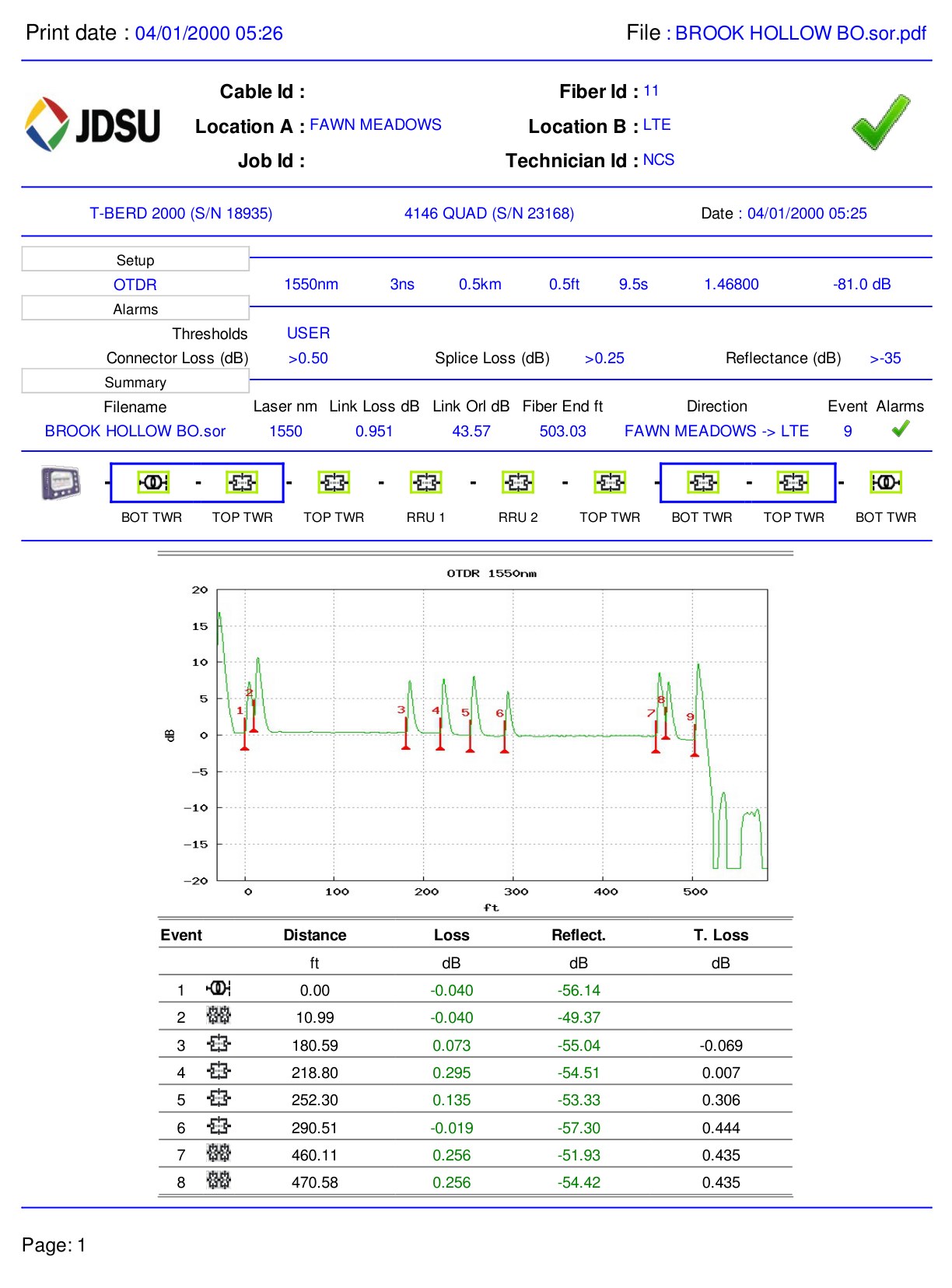
Passing Brook Hollow BO fiber OTDR report
Representative original report: BO passed at 0.951 dB link loss and 503.03 feet.
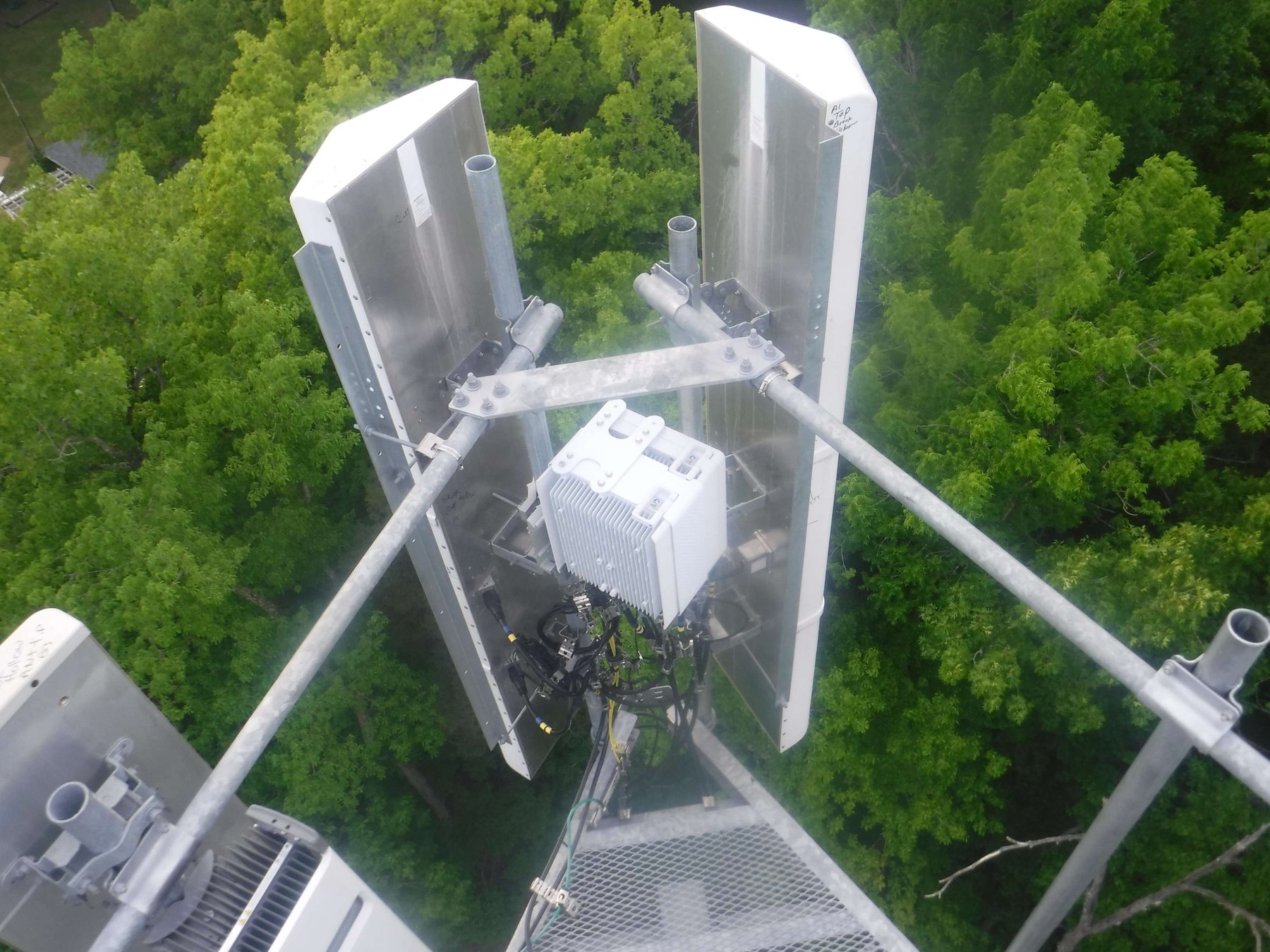
Top-side Brook Hollow fiber connections associated with OTDR validation
Tower-crew photo of the top-side fiber and power paths associated with the links I validated from the ground.

Document the remaining RET work

I captured six Andrew Teletilt Controller screenshots showing the main and secondary LTE 2212 RET state across Alpha, Beta, and Gamma. I labeled them by sector and radio so the cell technician could continue the RET correction work the next morning.
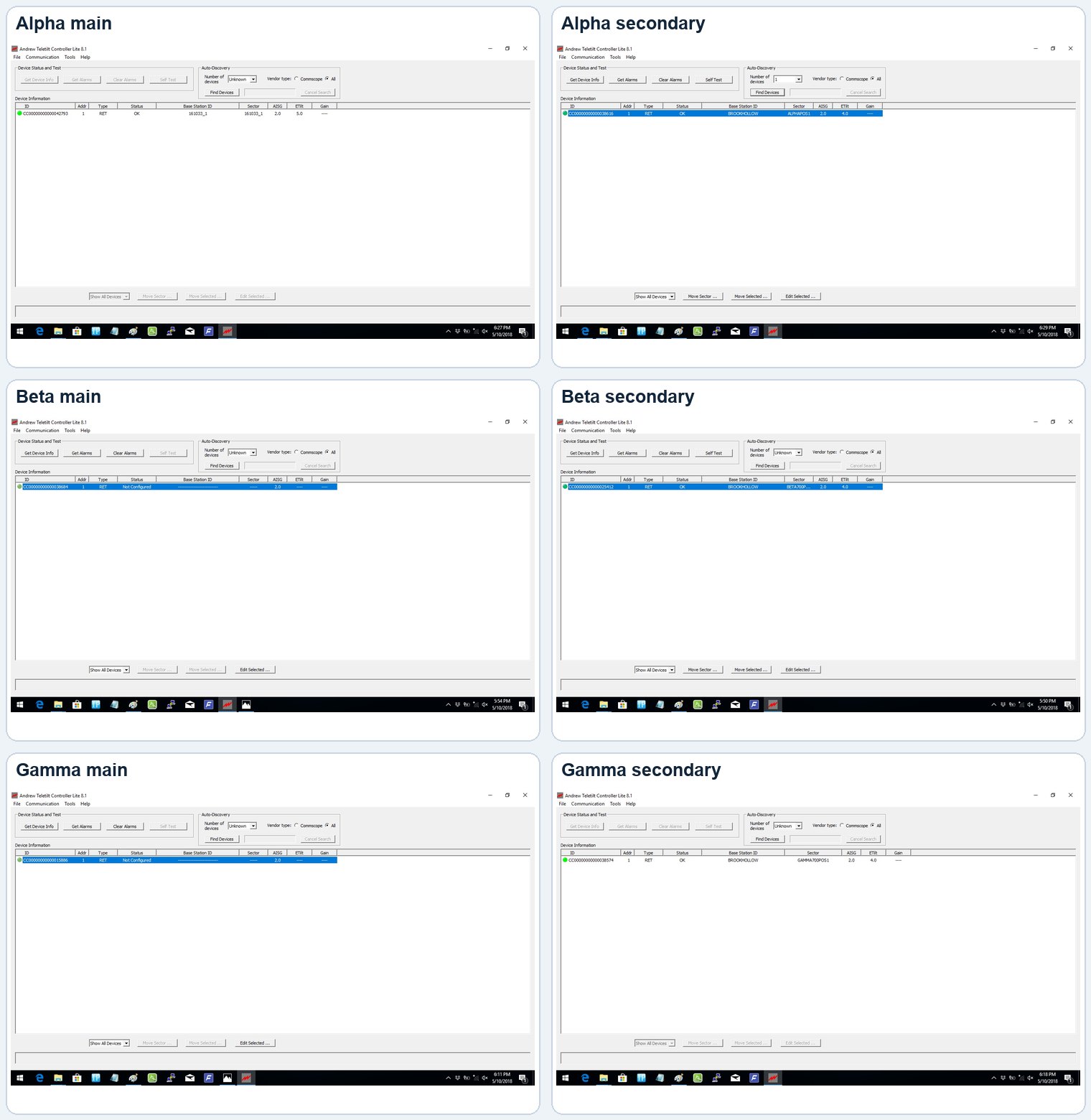
Six Brook Hollow RET screenshots organized by Alpha, Beta, and Gamma main and secondary paths
All six visit-specific RET screenshots, labeled by sector and main or secondary radio for handoff.
Remaining work: The May 10 update marked the radio-modernization work complete, but the RET correction still required a cell technician. The records do not show a passing RET follow-up.

Outcome

By the end of the three-day upgrade, six radios, three optics paths, and three power-protection paths had been changed. I also repaired the alarm circuit, verified all six fiber paths, and documented the remaining RET work for the cell technician.